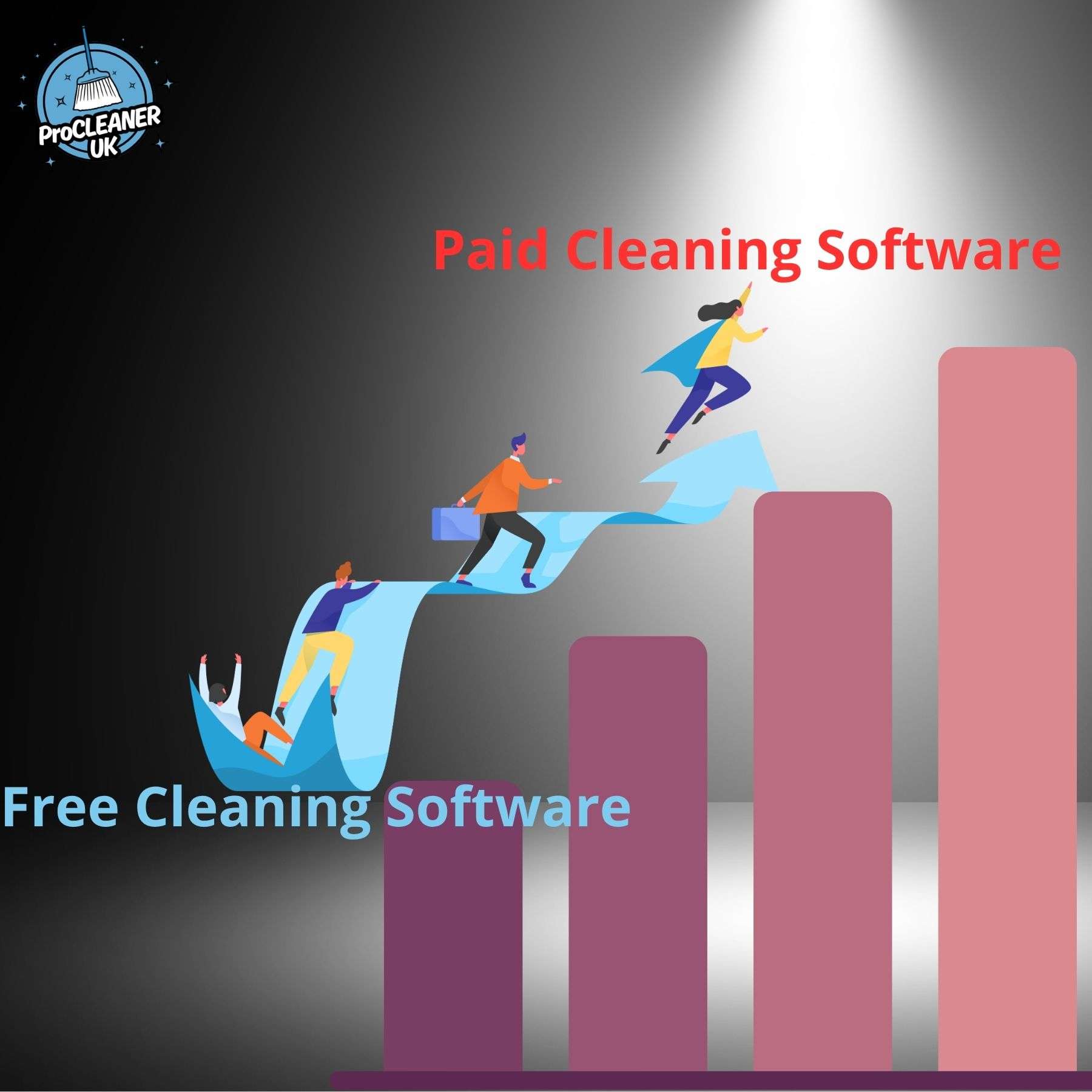
When money is tight, free software is tempting. A free calendar app, a free invoicing tool, spreadsheets and WhatsApp can run a small cleaning business for a while. So why would anyone pay for cleaning software?
This article gives an honest, balanced answer, written for cleaning business owners rather than software buyers. Free tools have their place, and paid software is not always the right choice. But there is a point where free becomes expensive, and knowing where that point is can save you a lot of time and money.
What free tools can do
A combination of free tools can handle the basics for a very small business:
- A calendar app for bookings.
- A spreadsheet for customer details and prices.
- A free invoicing app or template.
- WhatsApp or text messages for customers.
- Bank transfer for payments.
For a sole trader with a handful of regular customers, this can work perfectly well, and there is no need to pay for software you will not use.
The limits of free
Nothing is connected
Each free tool works on its own. A new customer is typed into your contacts, your calendar, your spreadsheet and your invoicing app. A price change has to be updated in several places. Mistakes creep in.
No automation
Free tools rarely send reminders, create invoices when jobs are done or chase late payers. You do it all by hand, usually in the evening.
No staff app
When you hire, free tools offer no way to give cleaners their jobs, checklists and access details in one place, no GPS clock-in and no proof of work. Rotas go out by text and timesheets come back on paper.
No payroll
Working out pay from paper timesheets is slow and leads to disputes.
No customer self-service
Customers cannot see their visits, pay online, reschedule or pause visits while away without contacting you.
Free plans with strings
Some “free” cleaning apps are free only up to a certain number of customers or jobs, show adverts, or keep essential features behind paid upgrades. Free can quickly become a paid plan you did not choose.
The hidden cost of free: your time
The biggest cost of free tools is the time you spend working around them: retyping information, sending reminders, writing invoices, chasing payments and answering calls that a customer app would prevent. If you spend even three or four hours a week on this, and value your time at a modest hourly rate, free tools are costing you far more than paid software would.
What paid cleaning software adds
A complete paid system such as ProCleanerUK connects everything:
- Recurring scheduling, route planning and customer away dates.
- A staff app that works offline, with checklists, photos and GPS or NFC clock-in.
- A customer app with live tracking, online payment and self-service.
- Quotes accepted online, automatic invoicing and Direct Debit.
- Payroll from clock-in data, plus absence management.
- Automated reminders, review requests and marketing funnels.
- Quote forms, landing pages, marketing reels, a website chatbot and an AI phone receptionist.
- Site assessments, tender packs, forms and e-signatures.
When free is enough
Free tools can be fine if:
- You work alone with a small number of regular customers.
- You are happy to do admin by hand.
- You do not plan to hire or grow soon.
When paid software pays for itself
Paid software usually pays for itself when:
- You have staff, or plan to hire.
- Admin is eating into your evenings or weekends.
- Invoices go out late or payments are slow.
- You are missing enquiries because you cannot answer the phone.
- You want commercial contracts that need evidence and documents.
- You are paying for several separate tools already.
Our article on the return on cleaning software shows how to work out the figures for your business.
What to check before paying
- Which features are included in the plan you need?
- How does the price change as you add staff?
- Is there a contract or can you leave any time?
- Does the staff app work offline?
- Is it built for UK cleaning businesses?
- Is there a proper free trial?
Our article on what you really pay for cleaning software covers hidden costs in paid software too.
A worked comparison
Imagine a cleaning business with four cleaners and fifty regular customers using free tools. Each week, the owner spends time building the rota, texting changes, typing invoices, chasing payments, collecting timesheets and working out pay. Even at a conservative few hours a week, valued at what the owner could earn cleaning, that time is worth several hundred pounds a month.
The same business on ProCleanerUK’s Bronze plan pays £79.99 a month. Recurring jobs fill the rota, changes go straight to cleaners’ apps, invoices go out automatically, Direct Debit collects payment, and clock-in records produce payslips. The subscription is a fraction of the time it saves, before counting faster payments or extra customers won through better follow-up. Your own figures will differ, but the pattern is very common: once a cleaning business has staff, free tools usually cost more in time than paid software costs in money. The tipping point often comes earlier than owners expect, typically around the first or second hire.
Switching from free tools
Moving from free tools to a paid system is straightforward. Export your customer list, set up recurring jobs, bring your team onto the app and switch invoicing over. Our guide to moving from paper to digital has a step-by-step plan that works just as well from free apps.
Try paid software for free first
The fairest way to compare is to try a paid system with your own customers before spending anything. ProCleanerUK’s 28-day free trial includes every feature and free training sessions. After that, plans start at £79.99 a month including VAT, with no contract. Or book a free demo and we will compare it with your current setup.
FAQs
Is there any good free cleaning software?
Free tools can handle the basics for a sole trader, but they rarely offer a staff app, payroll, automation or customer self-service.
What is the biggest downside of free cleaning software?
The time you spend retyping information and doing tasks by hand that paid software would automate.
When should a cleaning business start paying for software?
Usually when you hire staff, when admin eats into your evenings, or when you want to grow or win commercial work.
Do paid cleaning apps have hidden costs?
Some do, through tiers and add-ons. ProCleanerUK includes every feature on every plan, priced by number of staff.
Can I try paid software before committing?
Yes. ProCleanerUK offers a 28-day free trial with every feature.