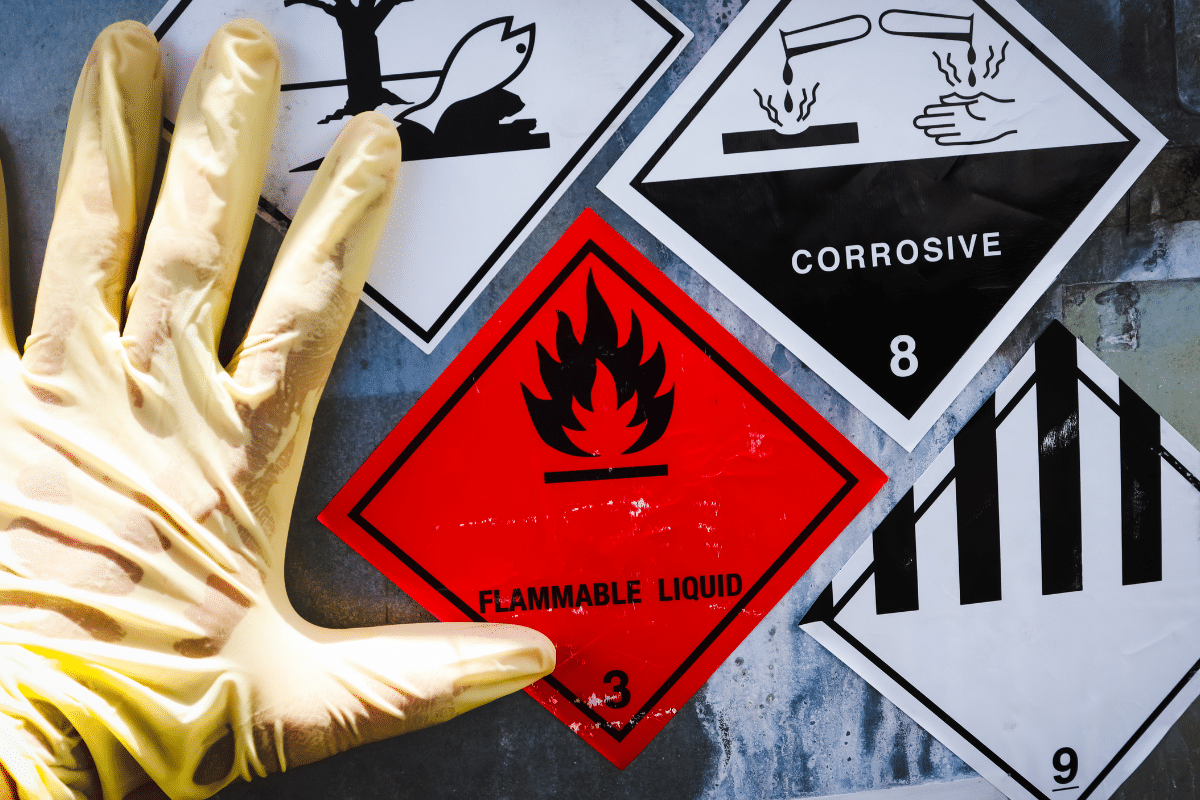
If you run a cleaning company, you use chemicals every single day. Toilet cleaners, degreasers, disinfectants, descalers, floor strippers, oven cleaners. They get the job done, but they also bring legal duties with them. In the UK those duties sit under COSHH, and most cleaning company owners know the word without being completely sure what it asks of them.
This guide walks through what COSHH means for a cleaning business, what you need to have in place for your staff, where most companies fall short, and how the new COSHH Sheets feature in ProCleanerUK puts every safety data sheet in your cleaners’ hands with one scan of a QR code.
Want to try it for yourself?
COSHH Sheets is included in ProCleanerUK alongside scheduling, invoicing, staff clock-ins and more. Start your 28 day free trial and have your first QR code printed today.
What is COSHH?
COSHH stands for the Control of Substances Hazardous to Health Regulations 2002. It is the law that requires employers to control substances that can harm their workers’ health. For a cleaning company that means the products your team handles on every job.
The Health and Safety Executive (HSE) is responsible for COSHH in Great Britain, and its guidance is refreshingly practical. The short version: know what you use, know how it can hurt people, put sensible controls in place, and make sure your staff know about them.
Why cleaning companies need to take it seriously
Cleaning is one of the industries HSE specifically publishes COSHH guidance for. In its key messages for cleaners, HSE points out that having your hands wet for long periods, or frequently through the day, can irritate the skin and lead to dermatitis. Some cleaning ingredients can cause skin allergies and asthma, and some products are corrosive and can burn skin and damage eyes.
None of that means cleaning is dangerous work when it is done properly. It means the controls matter: the right gloves, good ventilation, safe storage, good hand care, and staff who know what is in the bottle in front of them.
What COSHH asks of a cleaning company owner
You do not need to become a chemist. You do need to cover the basics, and cover them in a way you can show to a client, an auditor or an inspector if asked.
1. Know every product you use
Start with a simple list of every chemical product your company uses, across every site. It is common to find more than you expected: the products you buy centrally, the ones a particular client supplies, and the specialist ones used for deep cleans or one off jobs.
2. Get the safety data sheet for each one
According to HSE’s guidance on chemical safety data sheets, suppliers must provide an up to date safety data sheet for any substance that is dangerous for supply. The sheet describes the hazards the product presents and gives information on handling, storage and emergency measures.
If you do not have the sheet for a product, ask your supplier. Most publish them on their website, and wholesalers will send them on request.
3. Carry out a COSHH assessment
This is the part people often skip, so it is worth being clear about. HSE says plainly that a safety data sheet is not a risk assessment. The data sheet tells you about the product. Your assessment tells you how your staff use it, on your sites, and what you do to keep them safe.
HSE’s guide on how to carry out a COSHH risk assessment breaks it into four steps:
- Identify the hazards. Use the product labels and safety data sheets to work out which substances can cause harm.
- Assess the risks. Who could be harmed, how they could be exposed, how often and for how long.
- Control the risks. From swapping to a less hazardous product, through ventilation and safe working methods, down to gloves, aprons and eye protection.
- Review your controls. Check they are working and update the assessment when things change.
If you have five or more employees you must record your assessment. HSE also recommends writing it down even if you have fewer, and it is good practice either way. A written assessment is often the first thing a commercial client asks for when they check your health and safety paperwork.
4. Train your staff and give them the information
Your team needs to know which products are hazardous, how to use them safely, what protective equipment to wear and what to do if something goes wrong, such as a splash to the eyes or a spill. That information is only useful if it is available when it is needed, which is where most companies struggle.
5. Keep it up to date
Suppliers revise their data sheets. You change products. You win a new contract where the client supplies their own chemicals. Every one of those moments means your sheets and assessments need a check. A folder of printouts from three years ago does not reflect what your team is actually using today.
The real problem: the COSHH folder is never where the cleaner is
Ask most cleaning company owners where their safety data sheets live and the answer is one of these:
- A lever arch file in the office.
- A folder on someone’s laptop or a shared drive.
- A printed copy in the cleaning cupboard at one or two sites, often out of date, sometimes water damaged.
Now picture the moment the information is actually needed. A cleaner gets a splash of descaler on their arm at a client’s office at 6am. The office manager is not in yet. The folder is 20 miles away. The cleaner needs to know, right now, what the first aid measures are for that exact product.
Or picture an audit at a commercial site. The facilities manager asks to see the data sheets for the products your team uses in their building. You want to be able to show them on the spot, not promise to email them over later.
That gap between having the paperwork and having it where it is needed is exactly what our new feature closes.
Introducing COSHH Sheets in ProCleanerUK
COSHH Sheets lets you upload your safety data sheets once, then print QR codes that anyone can scan with a phone camera to see the right sheets instantly. No app to download, no login, no hunting through a shared drive.
Upload once, use everywhere
From the COSHH Sheets page in your ProCleanerUK account, upload each product’s safety data sheet and give it a name, supplier and any notes. For each sheet you choose where it applies:
- All sites for the products your team uses everywhere, like your standard multi surface cleaner or washroom products.
- Selected sites for products only used at specific customer addresses, such as a client supplied floor treatment or a specialist kitchen degreaser.
Because it works per service address, customers with several sites are covered properly. The kitchen cleaner used at a client’s restaurant does not clutter up the list at their head office.
Three kinds of QR code
- A company QR code that shows every sheet you have uploaded. Ideal for your vans, your storeroom and your staff induction pack.
- A QR code per site. Create one for any customer address and it shows the sheets set to All sites plus the ones picked for that address. Stick it inside the cleaning cupboard and every cleaner who works there has the right sheets in front of them.
- A QR code per sheet that opens a single product’s data sheet. Perfect for labelling a decanted spray bottle or a shelf.
Every QR code can be downloaded as an image or printed straight from the screen, and you can copy the link to send by text or email if you prefer.
Scan and see, no login needed
When someone scans a code, they get a clean, mobile friendly page with your company logo, the site name and the list of sheets. If the list gets long there is a search box so they can find the product in seconds. Tap a sheet and it opens.
That works for your cleaners, for a new starter on their first shift, for the client’s facilities manager and for an inspector. Nobody needs an account.
Always the latest version
When a supplier sends you a revised data sheet, replace the file in ProCleanerUK and every QR code already printed and stuck to a cupboard shows the new version straight away. No reprinting, no chasing round sites to swap out old paper copies.
You stay in control
COSHH Sheets is for public safety documents such as manufacturer data sheets, so anyone with the QR code can view them. If a code ever ends up somewhere it should not be, you can reset its link. The old code stops working immediately and you print a fresh one. Admins and managers can manage sheets and QR codes, just like the rest of the platform.
Get your sites sorted this week
Upload your data sheets, create a QR code for each customer site and print them. Most companies can have their busiest sites covered in an afternoon.
How to set it up in an afternoon
- Gather your sheets. Make your product list and download the latest safety data sheet for each one from your supplier.
- Upload them. Open COSHH Sheets in ProCleanerUK and upload each one, choosing All sites or the specific customer addresses it is used at.
- Create your site QR codes. On the QR Codes tab, create a code for each customer address you clean.
- Print and place them. Put each site’s code somewhere your team will see it: inside the cleaning cupboard door, next to the chemical store, or on the site’s key fob card.
- Tell your team. Show everyone how to scan a code with their phone camera. Add it to your induction and toolbox talks so new starters know from day one.
- Keep it current. Whenever you change a product or a supplier revises a sheet, replace the file. The codes on site update themselves.
What COSHH Sheets does not replace
We want to be straight about this. Having every data sheet on hand is a big step, but it is one part of COSHH, not all of it. You still need:
- Your COSHH assessments, written down if you have five or more employees.
- Staff training on the products they use and the controls you have put in place.
- The right protective equipment, provided and actually worn.
- Regular reviews when products, sites or ways of working change.
If you are unsure where to start with assessments, HSE’s COSHH assessment guide and its cleaning industry pages are the best free places to begin.
Why it matters for winning and keeping contracts
Commercial clients, managing agents and facilities teams increasingly check their contractors’ health and safety arrangements before signing, and again at renewal. Being able to show a QR code in every cleaning cupboard that pulls up current data sheets for that exact building tells them you run a professional, organised operation.
It is also one less thing to worry about on a Monday morning. Your team has what they need on every site, your clients can see it, and when a supplier updates a sheet you change it once rather than chasing round every building.
Frequently asked questions
Do cleaning companies legally need safety data sheets?
Suppliers must provide safety data sheets for products that are dangerous for supply, and you use them to carry out your COSHH assessments and inform your staff. Keeping them available to the people who use the products is part of doing COSHH properly.
Is a safety data sheet the same as a COSHH assessment?
No. HSE is clear that a safety data sheet is not a risk assessment. The sheet describes the product. Your assessment covers how your staff use it and what controls you put in place.
Do I need to write my COSHH assessment down?
If you have five or more employees, yes. HSE recommends writing it down even if you have fewer.
Do my cleaners need an app or login to see the sheets?
No. They scan the QR code with their phone camera and the sheets open in the browser.
Can I have different sheets for different customer sites?
Yes. Each sheet can apply to all sites or to specific customer addresses, and each site’s QR code shows only the sheets that apply there plus your All sites products.
What happens when a supplier updates a data sheet?
Replace the file in ProCleanerUK. Every QR code already printed shows the new version straight away.
Is COSHH Sheets included in my plan?
COSHH Sheets is available to every ProCleanerUK company, and you can try it free for 28 days along with everything else on the platform.
Start your 28 day free trial
ProCleanerUK is built for UK cleaning companies: scheduling, staff clock-ins, invoicing, quotes, customer portals, and now COSHH Sheets with QR codes, all in one place. Try the whole platform free for 28 days, upload your first safety data sheets and have QR codes on your busiest sites by the end of the week.
This article is general guidance for cleaning business owners and is not legal advice. For full details of your duties, see the HSE’s COSHH guidance and the Control of Substances Hazardous to Health Regulations 2002.